5 Books on Design Worth Reading for Non-designers
- 12 March 2015
- Khrystia Novak
- Design
- 8431

Managers, front-end developers and other little animals that work in companies, advertising agencies, etc, as well as their clients, sometimes have to estimate different design ideas. Even if nature has endowed you with aesthetic sensitivity, at least once, you have probably been in a situation when after having seen the design that doesn't meet you needs, you felt like a dog – you understood that something was wrong, but you could not say what the problem was.
Well, if you prefer not barking but speaking the same language with a designer at least at the basic level, I recommend reading books from the list below. They all are written in layman's terms and do not take any extraordinary intellectual efforts from the reader.
Just watch out – after reading them you won't become a professional designer and the ability to tell the difference between grotesque and medieval font does not entitle you to teach specialists. By the way, if you're going to, God forbid, engage yourself in design, the list will come in handy. A master Yoda in design can also read the books (of course, if he hasn't read them yet) in his spare time to unwind a bit and once again prove himself that he's a genius.
1. Robin Williams. The Non-Designer’s Design Books.
It's a perfect start for beginners. In the book, the author explains basic notions such as contrast, aligning, rhythm, grouping objects, and how it all works using fascinating examples.

2. Rebecca Hagen, Kim Golombisky. White Space is Not Your Enemy: A Beginner's Guide to Communicating Visually through Graphic, Web & Multimedia Design
In this book, you'll learn about the modular grid, 13 layout sins, use of colors, fonts and much more.

3. Susan M. Weinschenk. 100 Things Every Designer Needs to Know about People
The book concerns the design with regard to a user. The author answers the questions about how a person sees, reads, perceives information, focuses attention, takes decisions, etc.

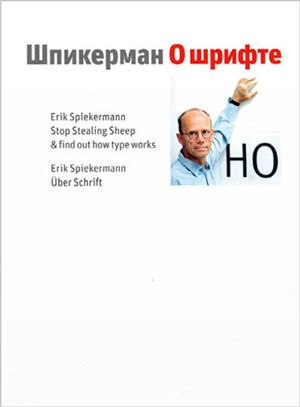
4. Erik Spiekermann. Stop Stealing Sheep & Find Out How Type Works
The author writes about when, where and how people used fonts. The book contains more illustrations than text, so it's perfect reading for those who are afraid of any longform stories.
5. Alexandra Korolkova. Live Typography
This book contains a little bit of everything – history of typography, anatomy of fonts, and tips on what you can do with all of these. The book came out in 2007, and it has had three editions since that time. I recommend reading it after we've done with Spiekermann's Stop Stealing Sheep & Find Out How Type Works.

Lastly, this list is not entirely objective and comprehensive. There are many books worth mentioning. But not everything at once :)


